

Heartfelt villages: 10 hidden treasures of Portugal
By Joana Sá Pinto
In a country that has so often lost its way in the rush of concrete and unbridled construction, there are villages that have survived as islands of authenticity. These settlements, often forgotten for decades, are now true time capsules, places where architecture, landscape, and way of life resist the erosion of modernity.
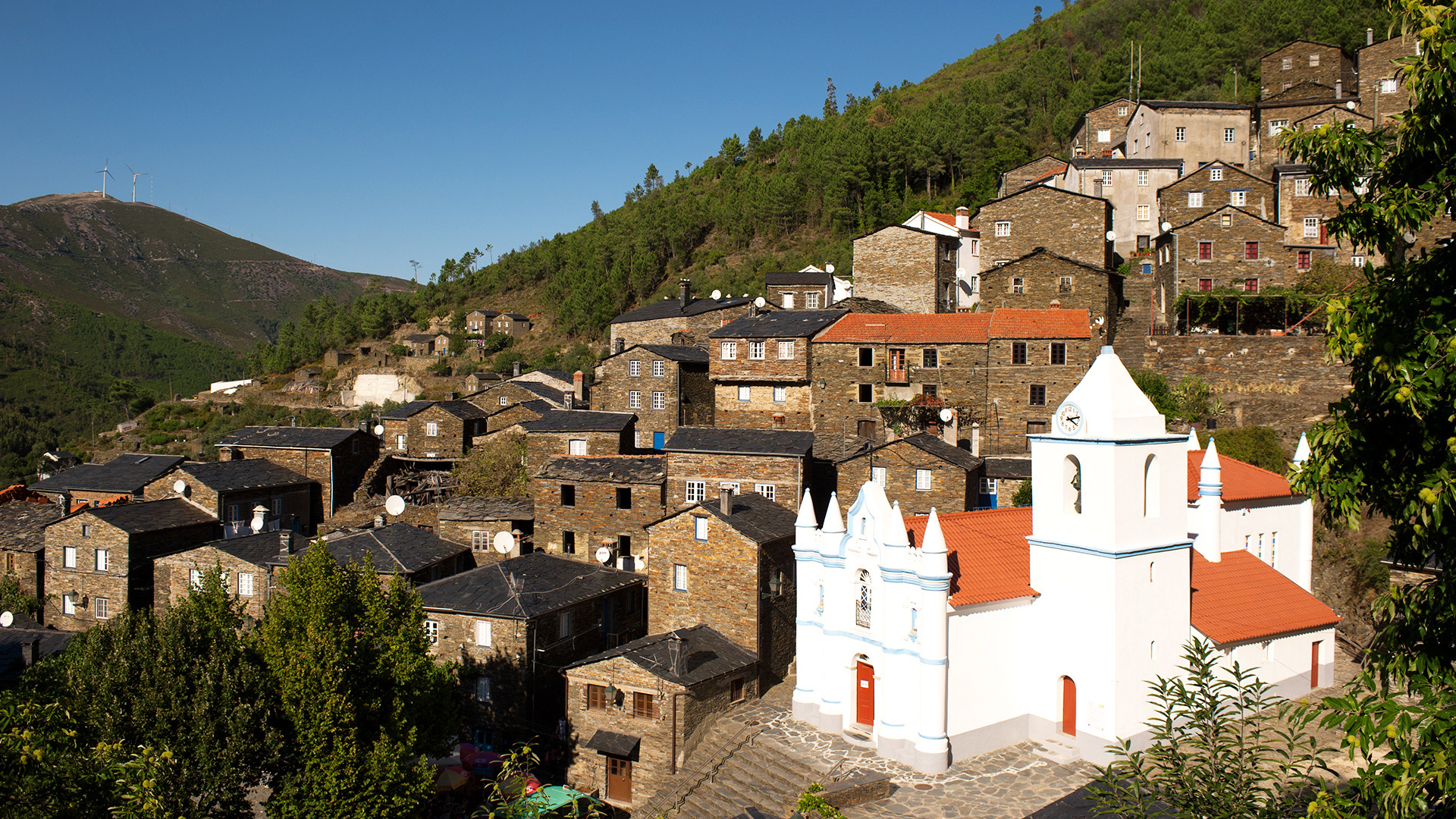
Piódão
They hold within them not only stone walls and narrow streets, but ways of life, traditions, and ways of being. They are pieces of national identity that must be preserved.
A timeless soul, carved in stone
Amidst five decades of unbridled urban expansion and architectural disarray, Portugal nearly lost the delicate balance between progress and preservation. Many towns have grown chaotically, losing their historical character to a tide of concrete. But some villages, nestled on mountaintops, tucked into river valleys, or clinging to coastal cliffs, have endured. They are more than picturesque: they are living archives of a Portugal that still breathes authenticity, silence, and soul.
These villages are not just postcards for tourists. They are places where traditions survive the test of time, where older generations still sweep their front doors at sunrise, and where daily life still holds meaning beyond screens and speed. Preserving them means more than restoring façades: it means keeping people there, giving new life to homes, supporting local shops and crafts, and ensuring that tourism doesn’t erase the very soul it comes to seek.
This is a tribute to ten remarkable villages, living jewels, each with its own rhythm, texture, and story.
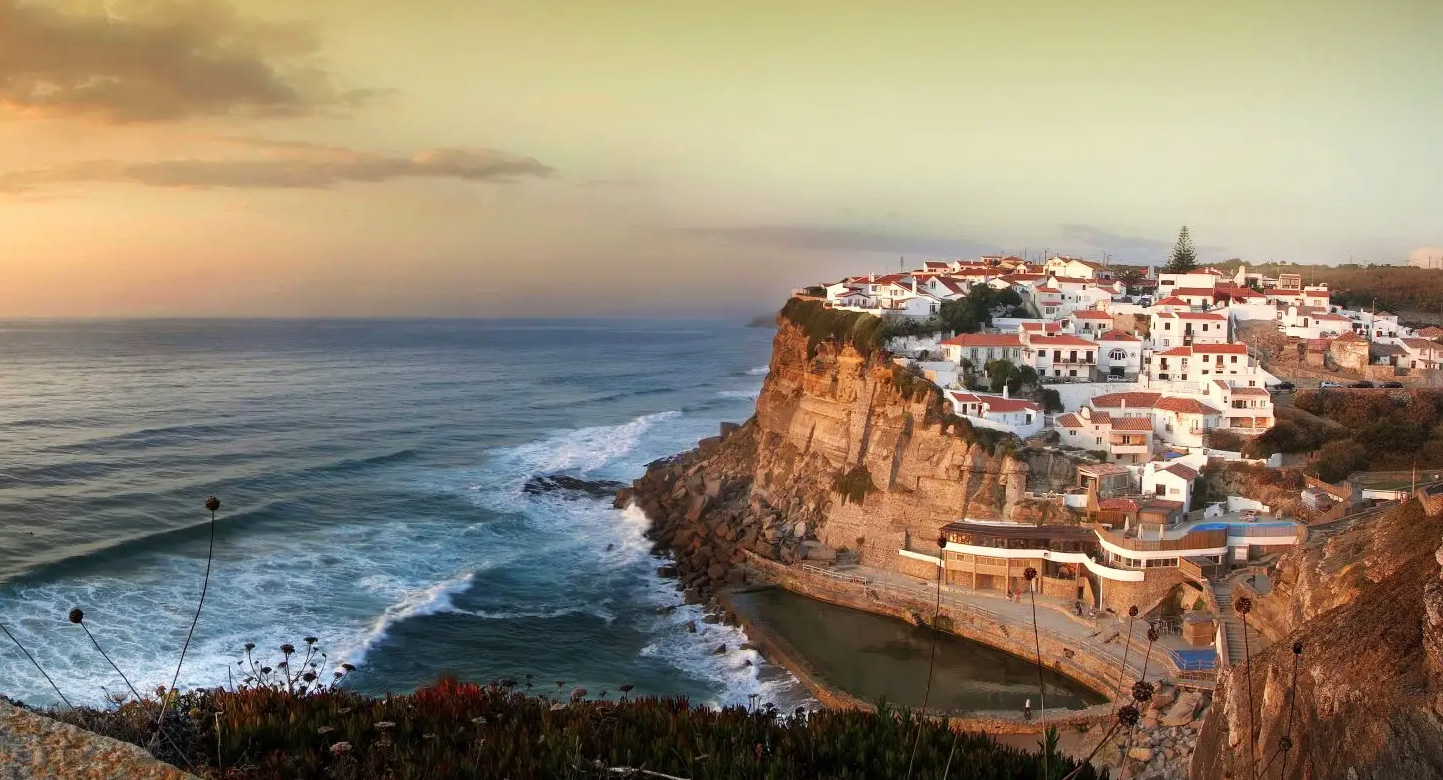
Sintra
AZENHAS DO MAR
White houses perched over waves, where land ends and dreams begin.
Azenhas do Mar is the kind of place that makes you stop. Clinging to a cliffside with the Atlantic below, this iconic village near Sintra is known for its cascading white houses, a natural ocean pool, and soul-soaked sunsets. Once a summer haven for Lisbon’s elite, its saloio spirit lives on through weekend markets, local wine, and Atlantic breeze that carries both nostalgia and sea salt. It’s not just a view, it’s a story told in blue.
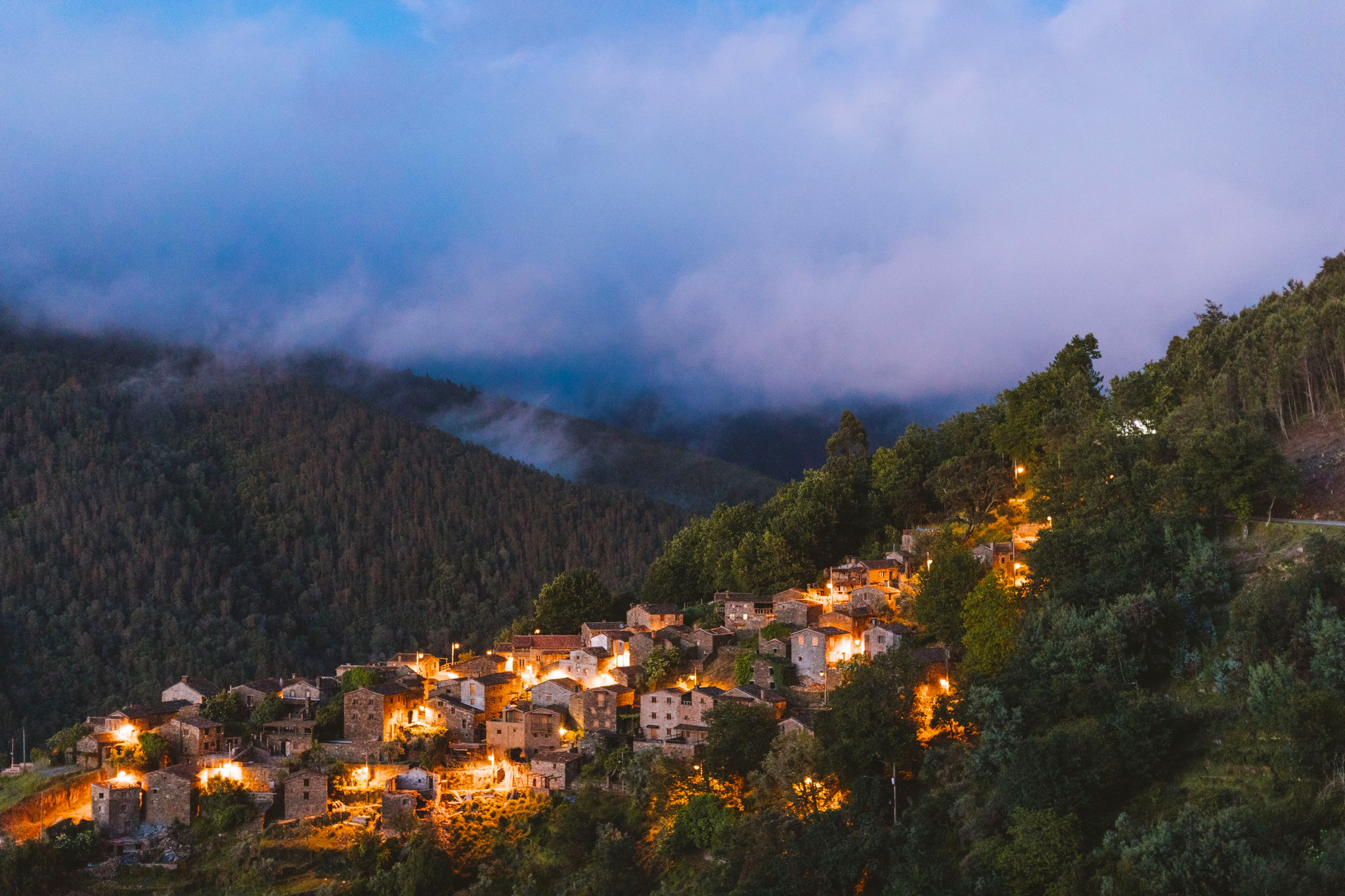
Lousã
TALASNAL
Where fog wraps the xisto, and silence becomes sanctuary.
In the Serra da Lousã, the schist village of Talasnal rises like a secret from the forest. Abandoned during the 20th-century rural exodus, it has since been carefully revived, stone by stone. There are no cars, no neon lights, only steep alleys, the smell of woodsmoke, and houses that blend with the landscape. Today, Talasnal offers more than charm: it is a case study in rural regeneration done right. Come for the views. Stay for the stillness.
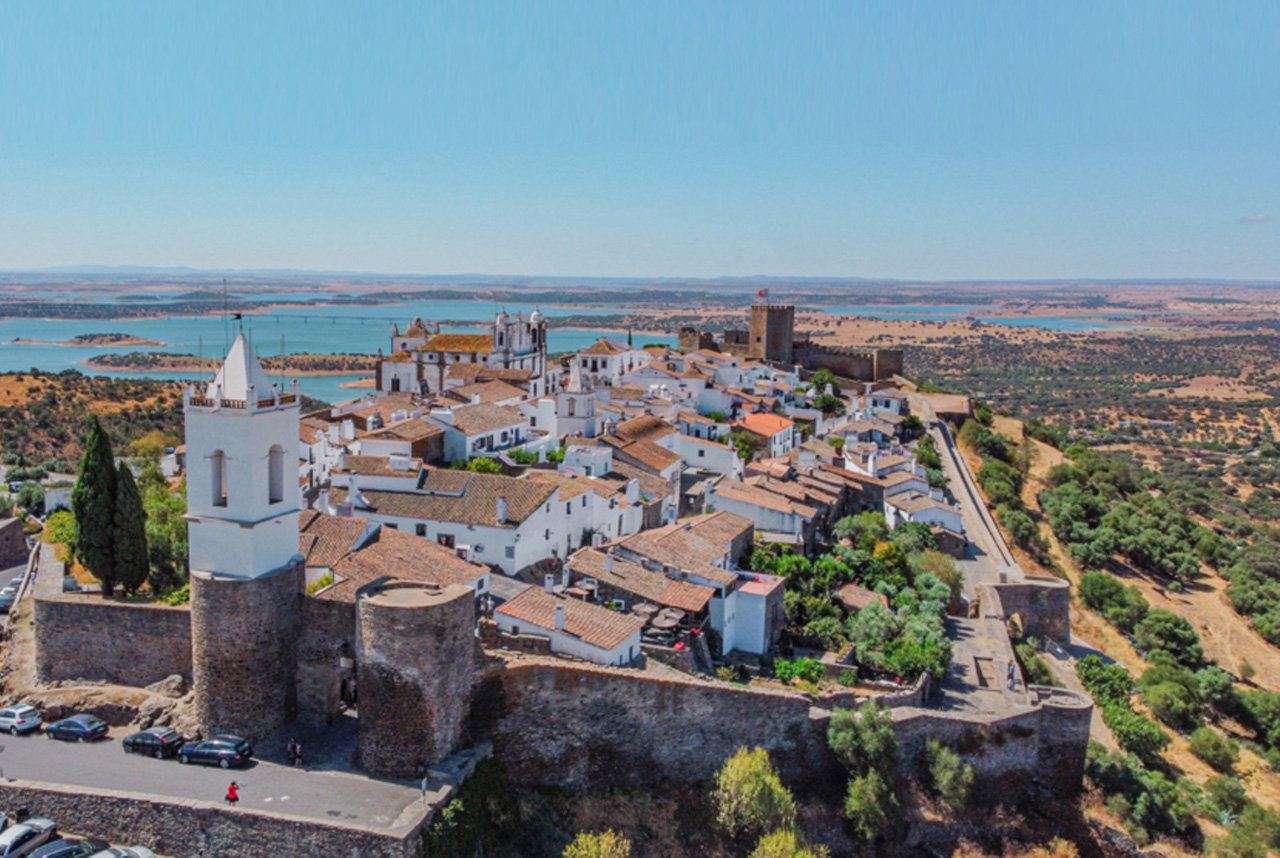
Reguengos de Monsaraz
MONSARAZ
Walled silence above the Alqueva, where time is sun-drenched and slow.
One of the oldest settlements in the Alentejo, Monsaraz sits on a hilltop overlooking Europe’s largest artificial lake, the Alqueva. Enclosed by medieval walls and cobbled lanes, it feels like stepping into a forgotten era. The whiteness of the façades dazzles under the southern sun, while the surrounding silence is only broken by church bells or the wind whispering through the olive trees. More than a museum-village, Monsaraz is a living sculpture in white and ochre.
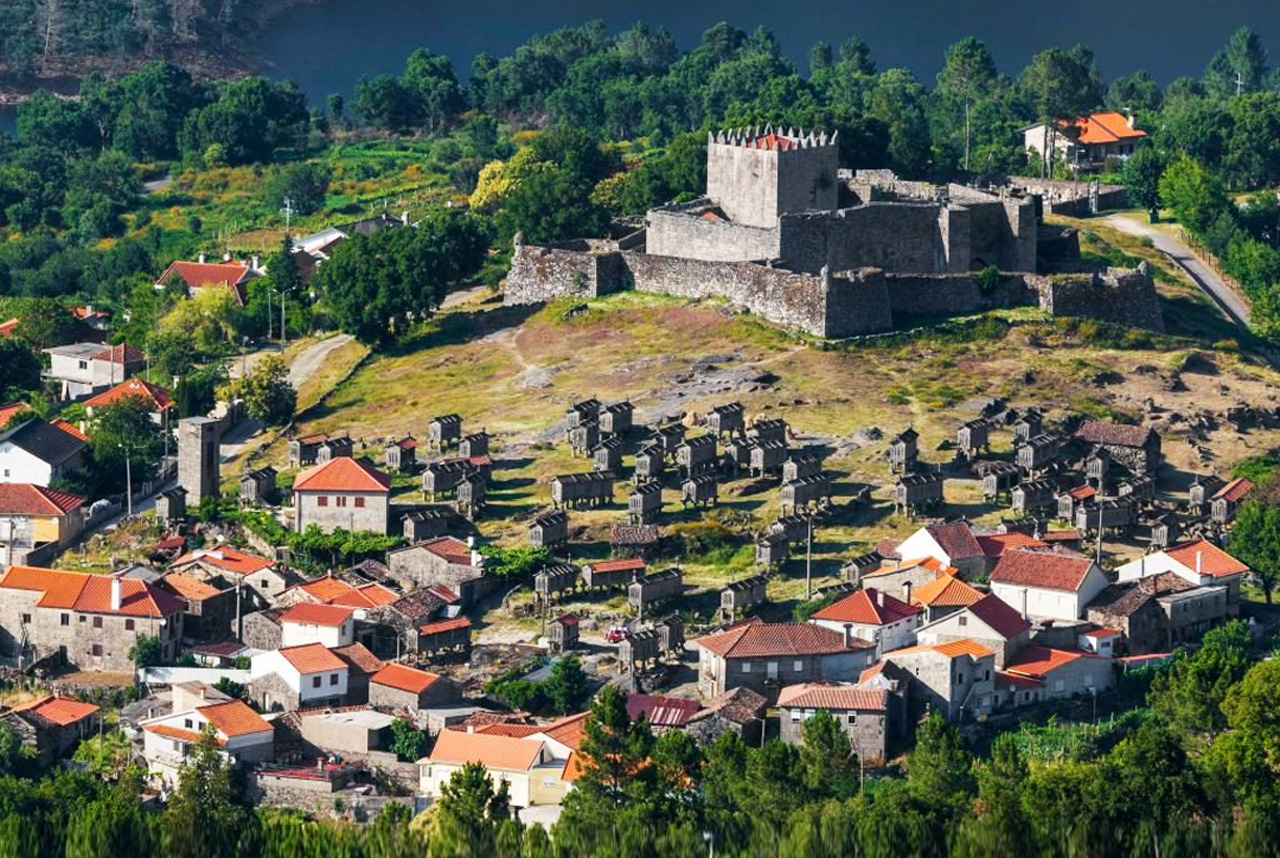
Ponte da Barca
LINDOSO
Where granite tells stories and the wind rattles through history.
Hidden in the Peneda-Gerês National Park, Lindoso combines natural grandeur with a formidable medieval legacy. Its castle, still standing watch over the valley, is flanked by a rare collection of espigueiros, traditional granaries set on stone stilts. Here, heritage isn’t just admired, it’s part of everyday life. Cows still graze the fields, the bakery still sells broa de milho, and the rhythm is dictated by mountain light and pastoral rituals.
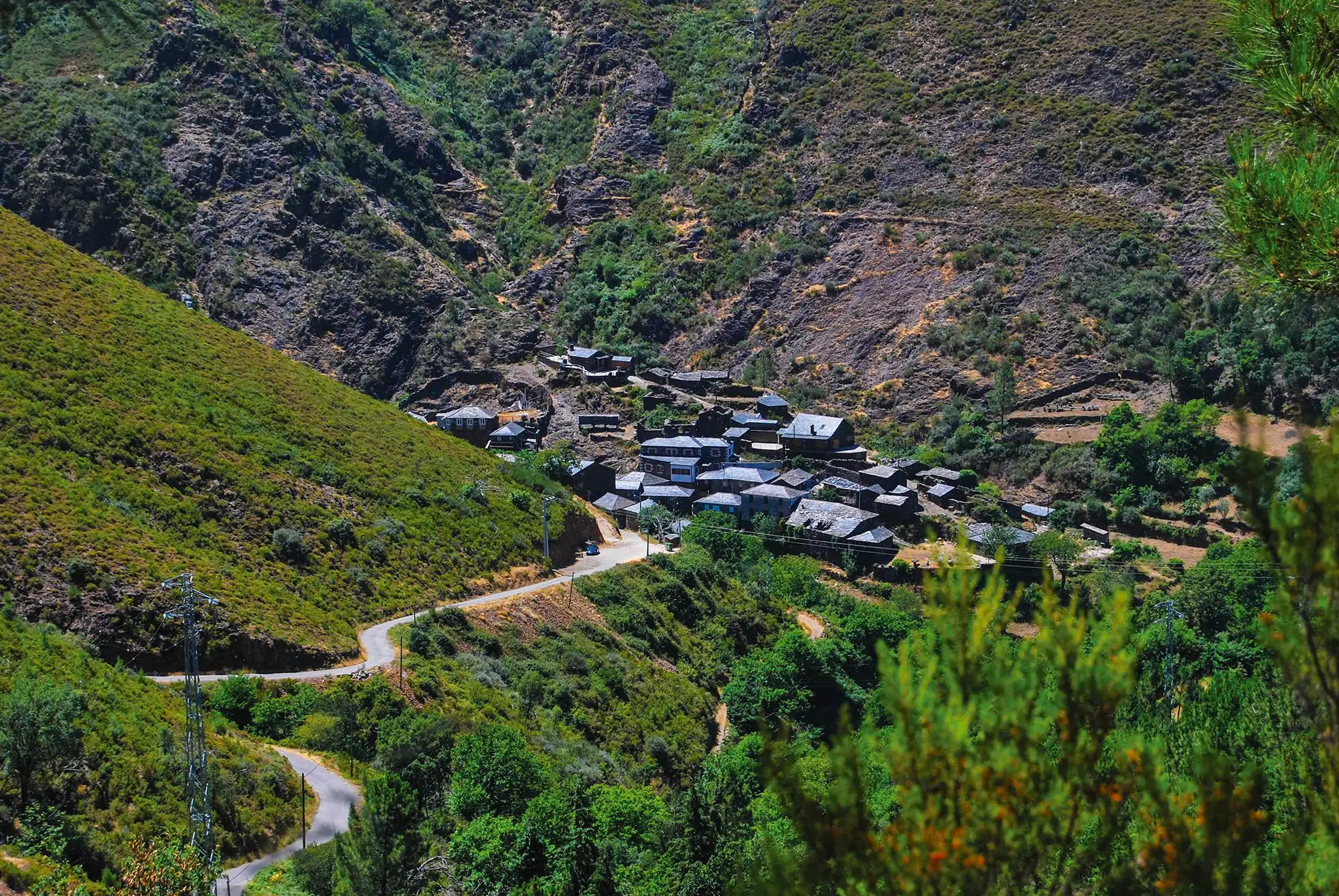
Góis
PENA
A village with thirteen souls and one infinite silence.
Tucked away in the depths of the Serra de São Macário, Pena is one of Portugal’s most remote villages. With only a handful of residents, its survival is a miracle of resilience. No phone signal, few modern comforts, but a rare purity. Every step here feels like a poem; every view, a painting. For those who dare to disconnect, Pena offers the ultimate reward: quietude as a form of luxury.
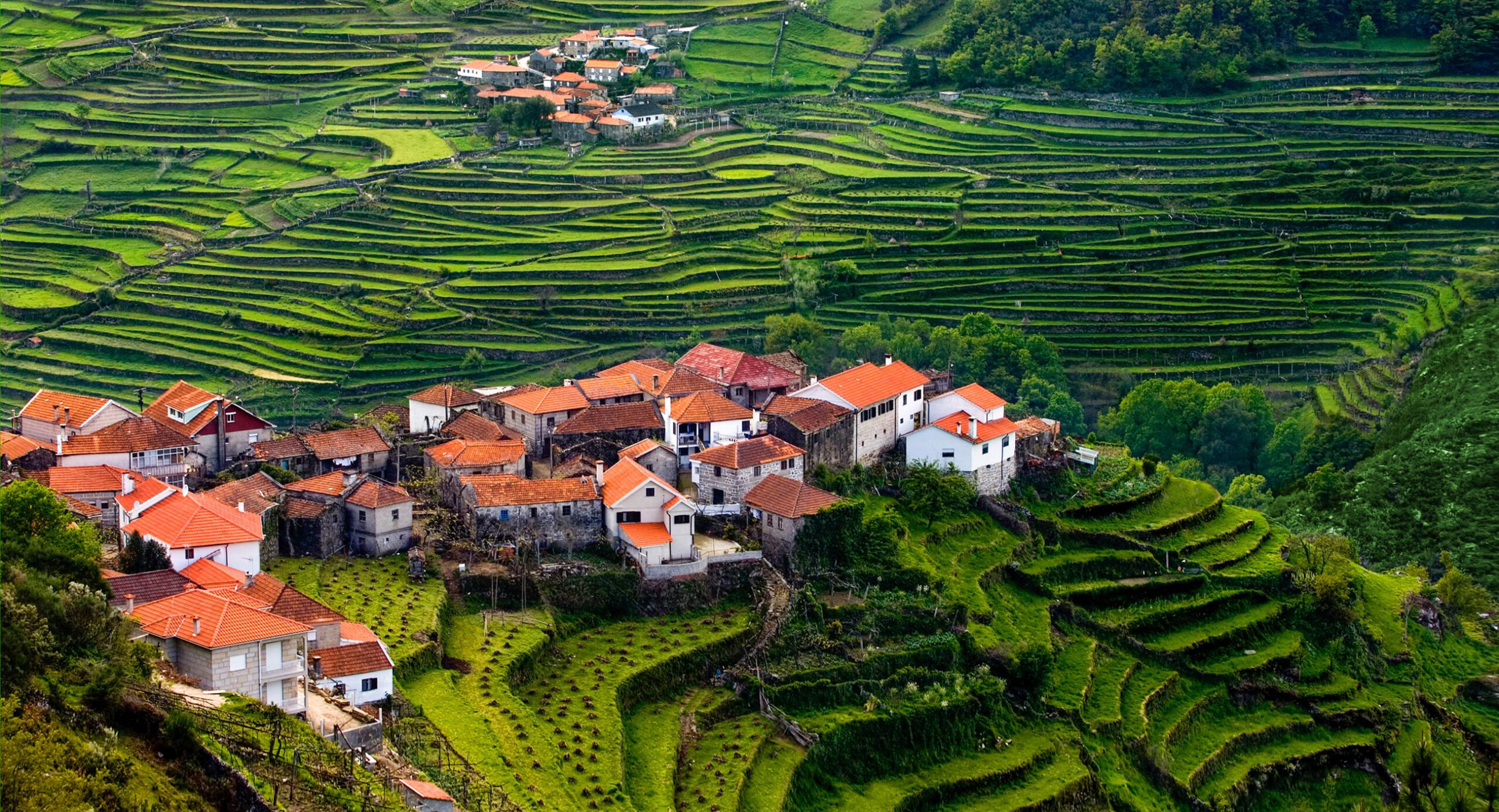
Arcos de Valdevez
SISTELO
The green stairway to the sky, Portugal’s “Little Tibet.”
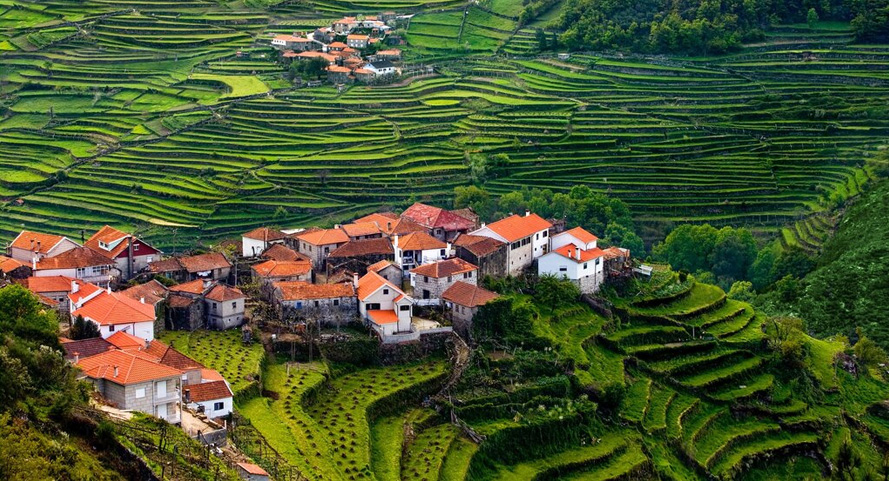
Sistelo, in the far north of Portugal, surprises with its agricultural genius: verdant terraces carved into steep hillsides, resembling Andean or Himalayan landscapes. Declared a cultural landscape of national interest, it is a triumph of sustainable rural architecture. Hikers follow ancient trails, herds of cows still roam the meadows, and locals keep the terraces alive, not for show, but for survival. Here, the landscape isn’t just admired: it is inhabited, worked, and loved.
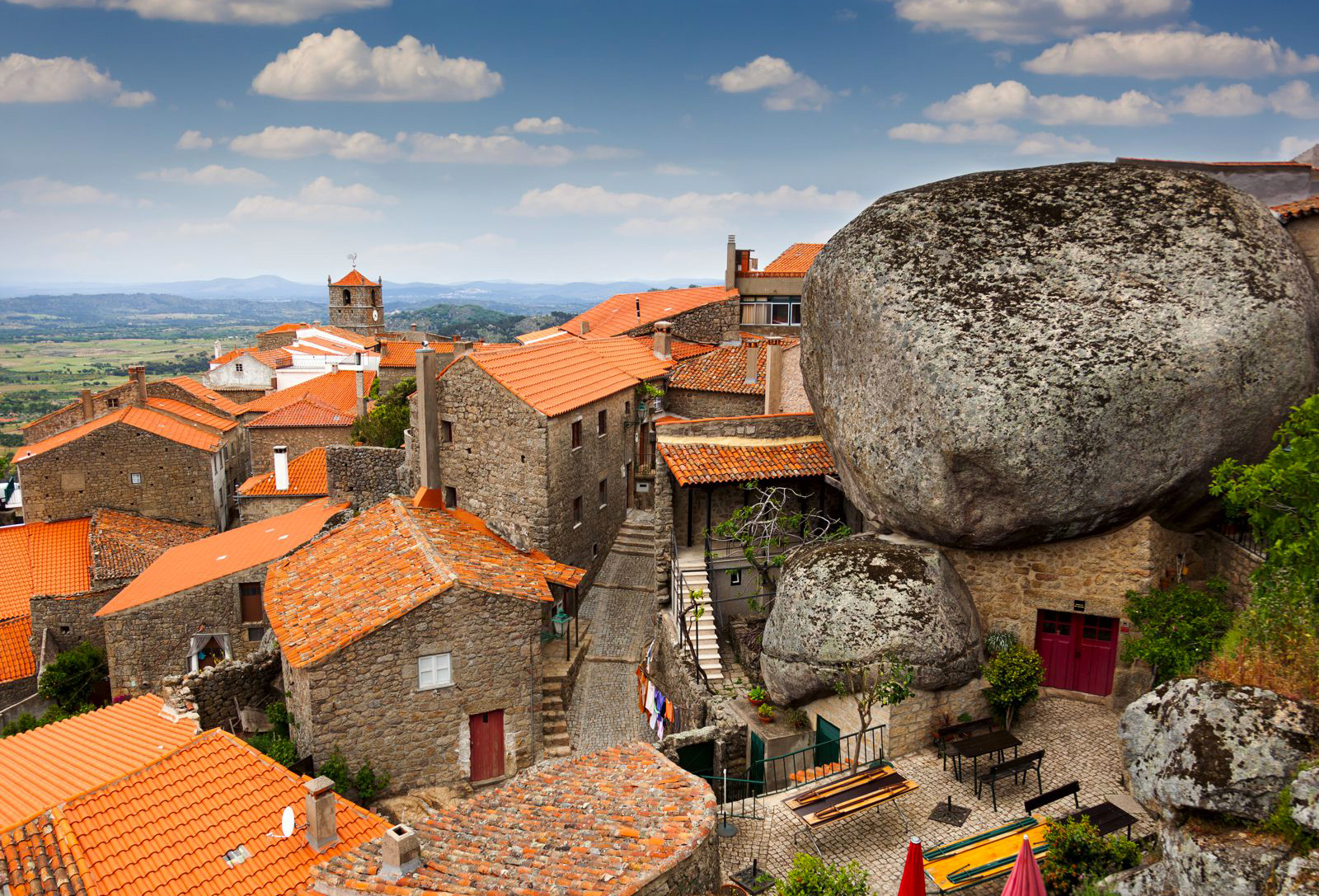
Idanha-a-Nova
MONSANTO
The village where boulders became roofs and legends were carved in granite.
Perched on a mountain in central Portugal, Monsanto defies logic. Houses squeeze between gigantic boulders, staircases are carved into rock, and every path feels like a pilgrimage. In 1938, it was named “the most Portuguese village in Portugal,” a title that belies its absolute uniqueness. It’s not just a village, it’s a geological fable, a living gallery of resistance and reinvention. And yes, it looks just as magical at night.
Portalegre
MARVÃO
A castle among the clouds, guarding the border and the silence.
From Marvão’s fortress walls, the Alentejo stretches out like a living tapestry, and Spain glimmers just beyond the horizon. This fortified village has long guarded the eastern frontier, but today it offers peace, not protection. Its cobbled streets curve gently toward viewpoints and gardens, while the scent of rosemary and baked bread floats on the wind. It is one of the few places where altitude feels like serenity, not detachment.
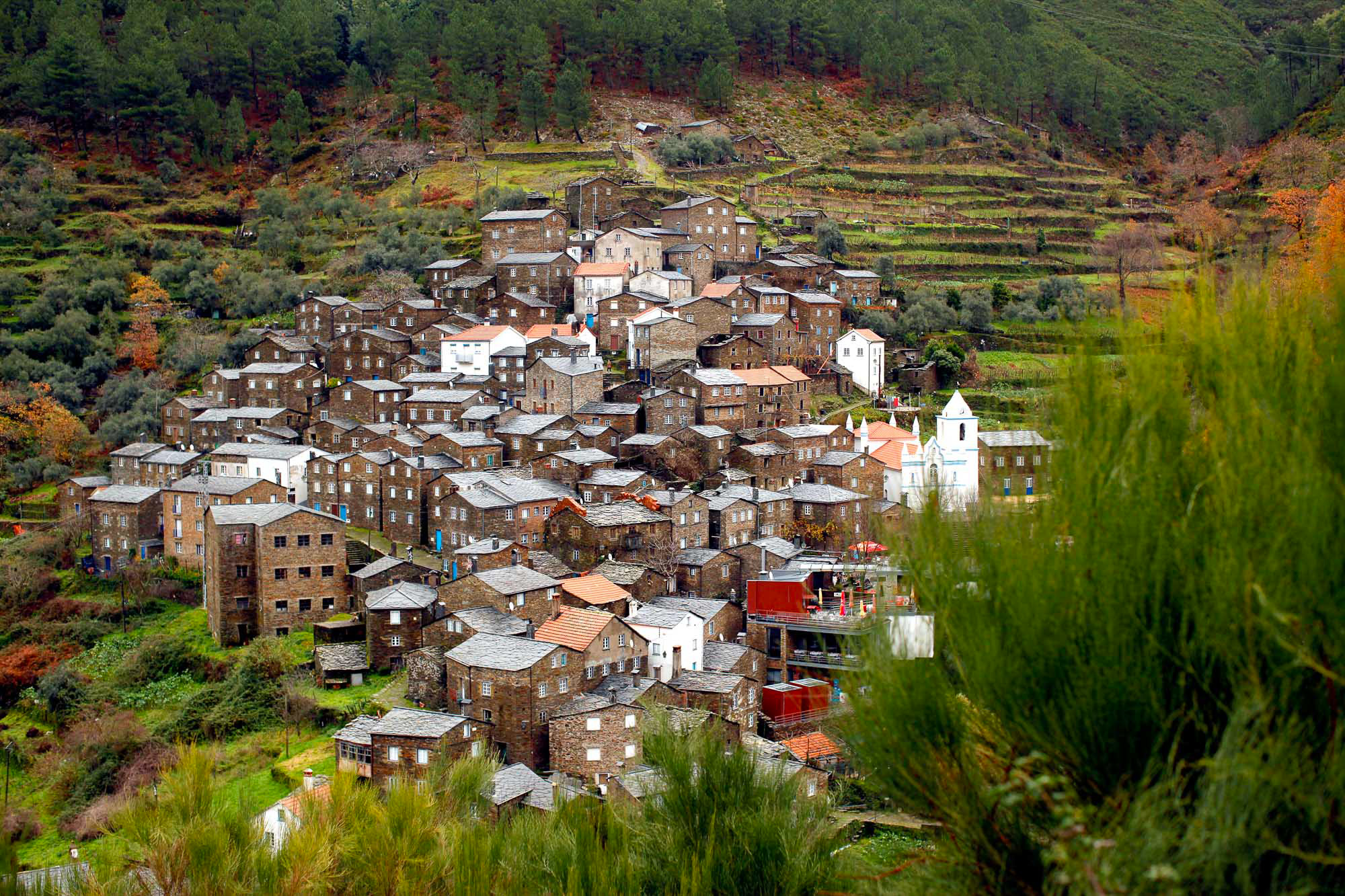
Arganil
PIÓDÃO
Schist and soul in shades of blue.
Hidden in the Açor mountains, Piódão is a village woven into the hillside, a patchwork of dark stone and bright blue windows. The visual contrast is striking, but it’s the coherence that captivates. Everything feels hand-built and human-scaled, from the chapel to the fountain to the tiny grocery store. Especially magical in winter, when fog coats the rooftops and woodsmoke rises in spirals, Piódão is the kind of place that whispers rather than shouts, and stays with you long after you leave.
Sabugal
SORTELHA
A medieval memory held in granite and wind.
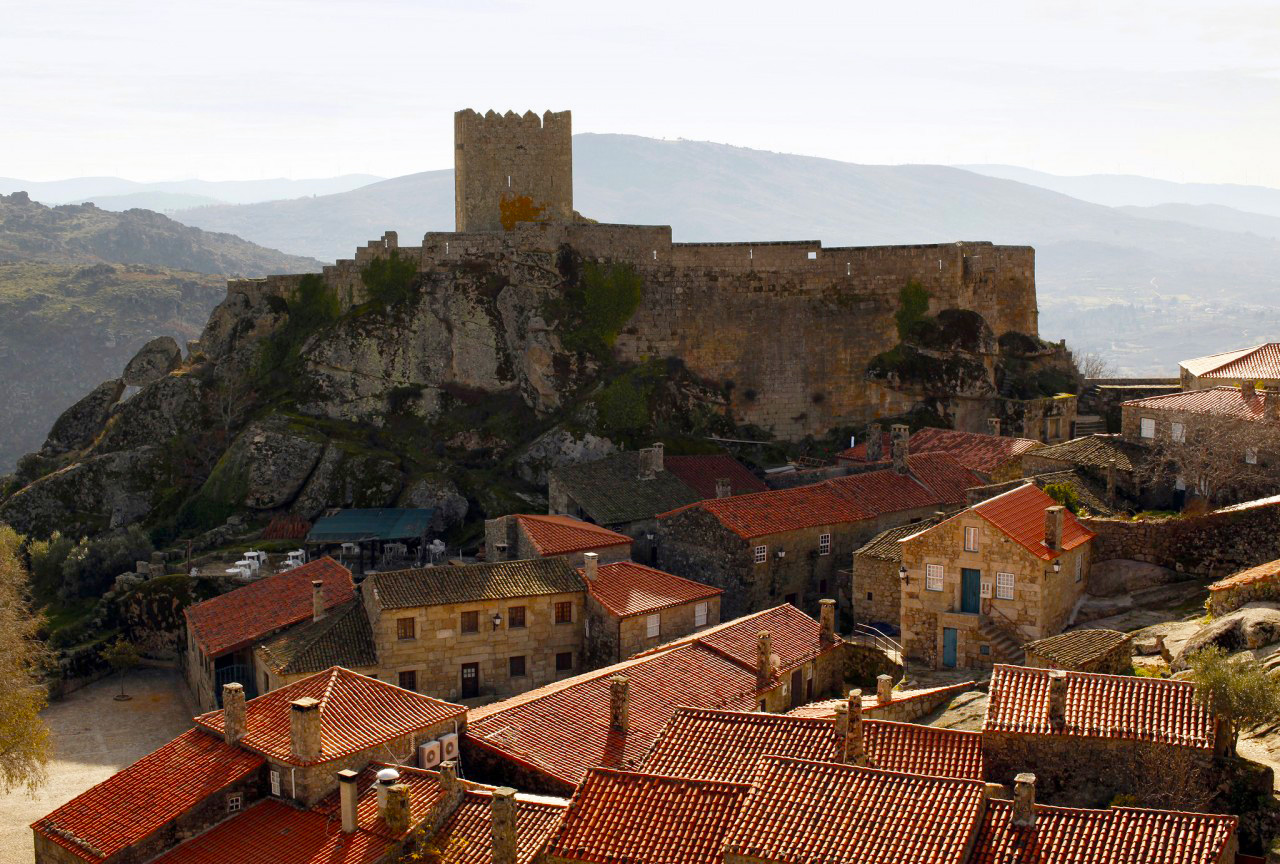
Sortelha is a suspended moment. Encircled by fortified walls and overlooked by a 13th-century castle, this is one of the best-preserved historical villages in Portugal. Walking through its granite streets is like wandering into a lost chapter of time: no modern signage, no visible wires, just stone and silence. The village hosts annual medieval fairs, but the real charm is its year-round authenticity. Sortelha isn’t a backdrop, it’s a stage, and life still happens here.
These villages are small bastions of authenticity.
Preserving the future with roots in the past
These villages are, each in their own way, small bastions of authenticity in a rapidly changing country. Valuing them is more than promoting them on Instagram or renovating houses for local accommodation: it is investing in public policies for rural housing, in incentives for traditional commerce, in a culture of proximity.
Because preserving a village with soul means ensuring that Portugal continues to have places where time is not rushed, where the past is not a burden, but a living presence.
And that, today more than ever, is a form of resistance.