


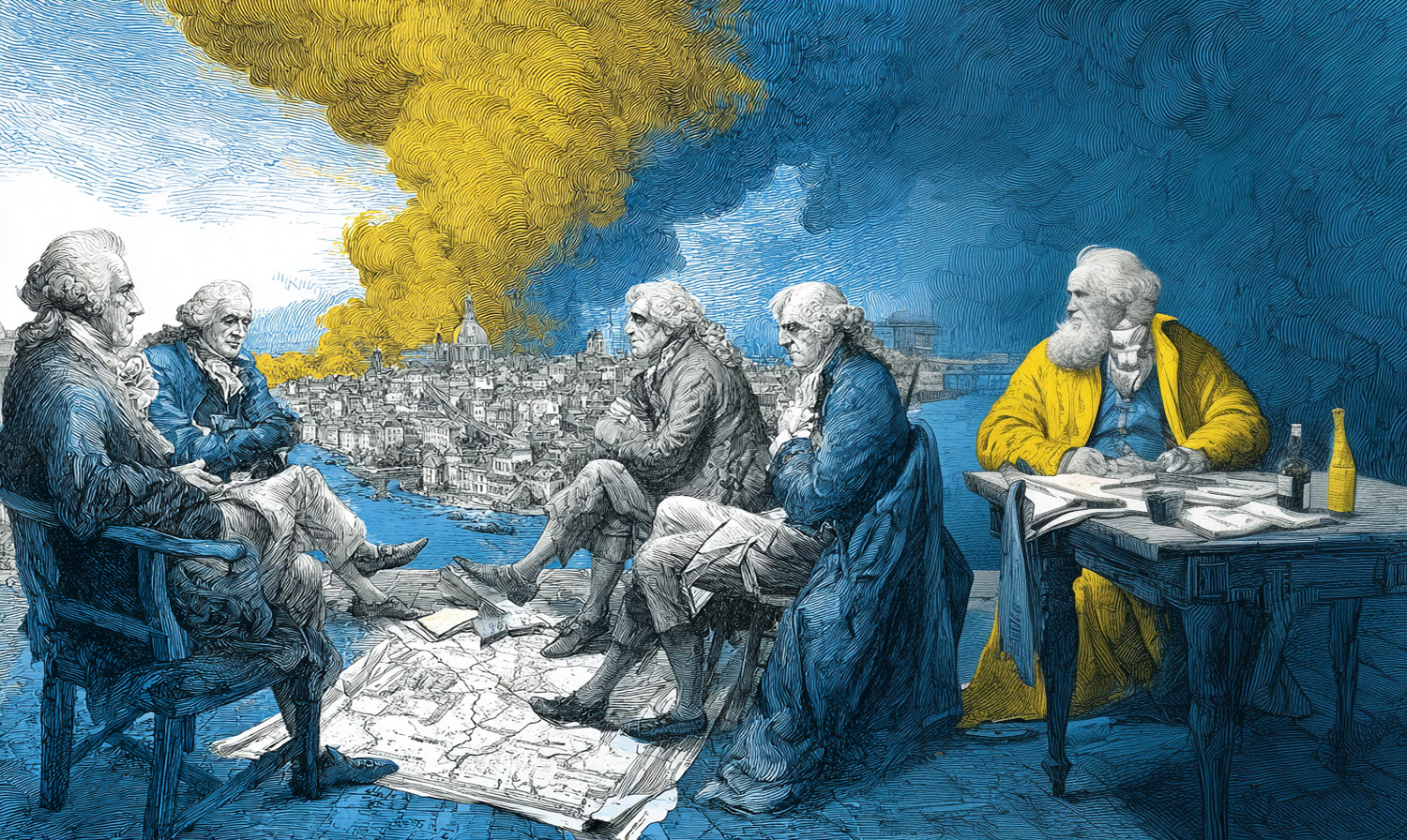
Lisbon, 1755: the earthquake that shook God, the world and reason
By Álvaro Reis
In a single moment, the earth shook and with it, faith, reason, and the order of the world. The earthquake devastated the city, but also shook the conscience of Europe.
“Lisbon was a city of priests, prostitutes, and palaces.”
Voltaire
The city before the abyss: gold, lust and contradiction
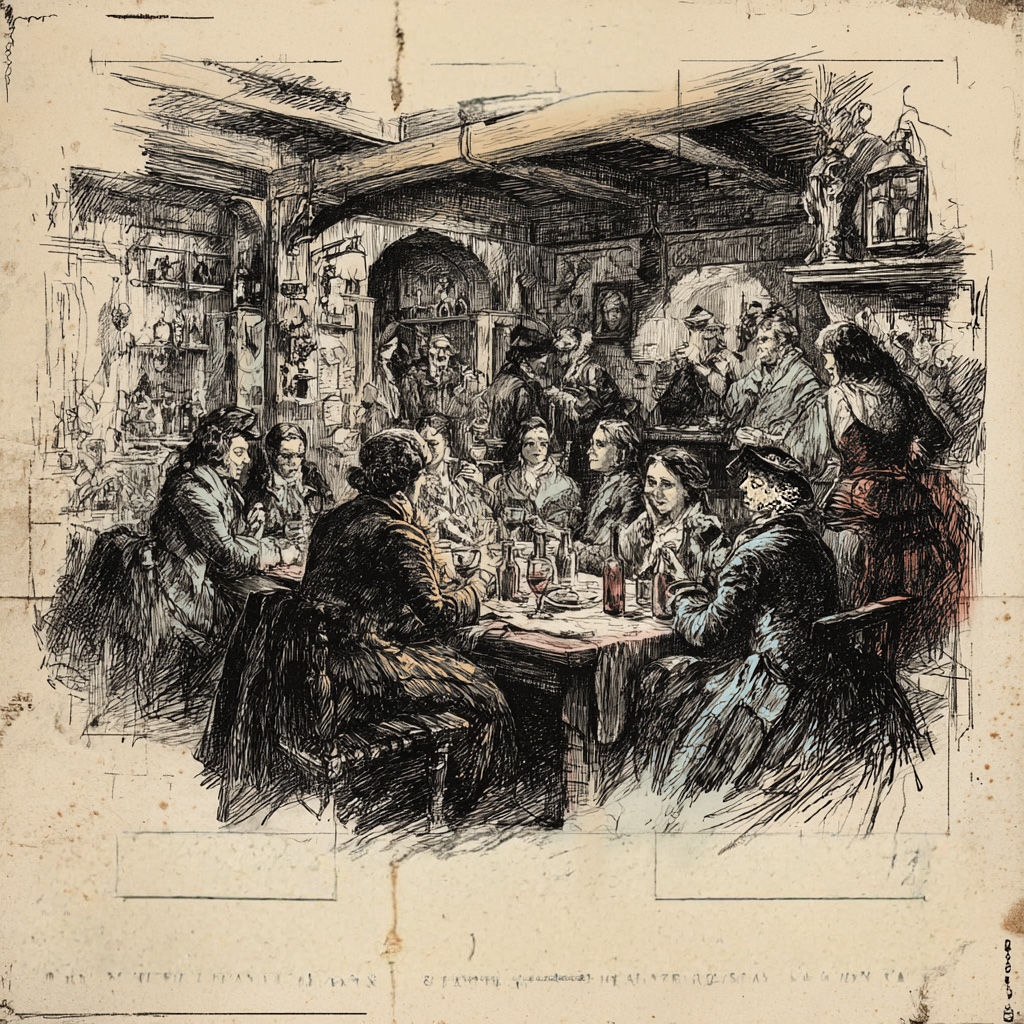
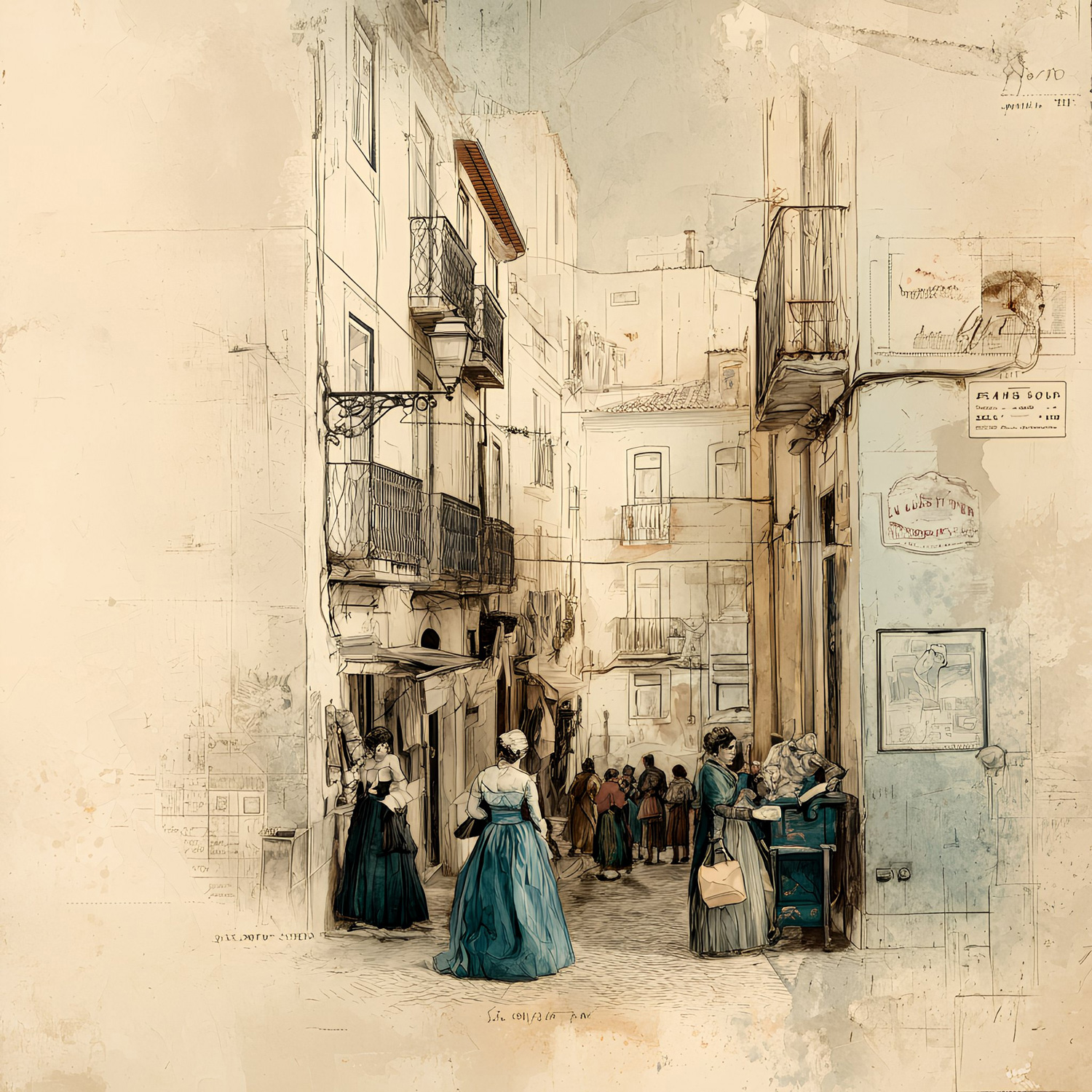
On the morning of November 1st, 1755, Lisbon was an imperial capital and a mirror of its contradictions. Bathed in the light of the Tagus and enriched by the gold of Brazil, it was a city of opulence, devotion, superstition, and decadence. The heart of the empire pulsed through Baroque churches, convents, palaces, and taverns. Piety was ostentatious, but fervour lived alongside public vices, stark inequality, and a worldly sensuality that both seduced and scandalised foreign travellers.
Voltaire, who would later write about the disaster with lucid irony, described Lisbon as “a city of priests, prostitutes, and palaces.” It fascinated Enlightenment thinkers for its Catholic exoticism and horrified them with its inquisitorial violence and clerical extravagance. For many, Lisbon stood as a symbol of colonial wealth and moral ambiguity.
The earthquake as a metaphor for evil
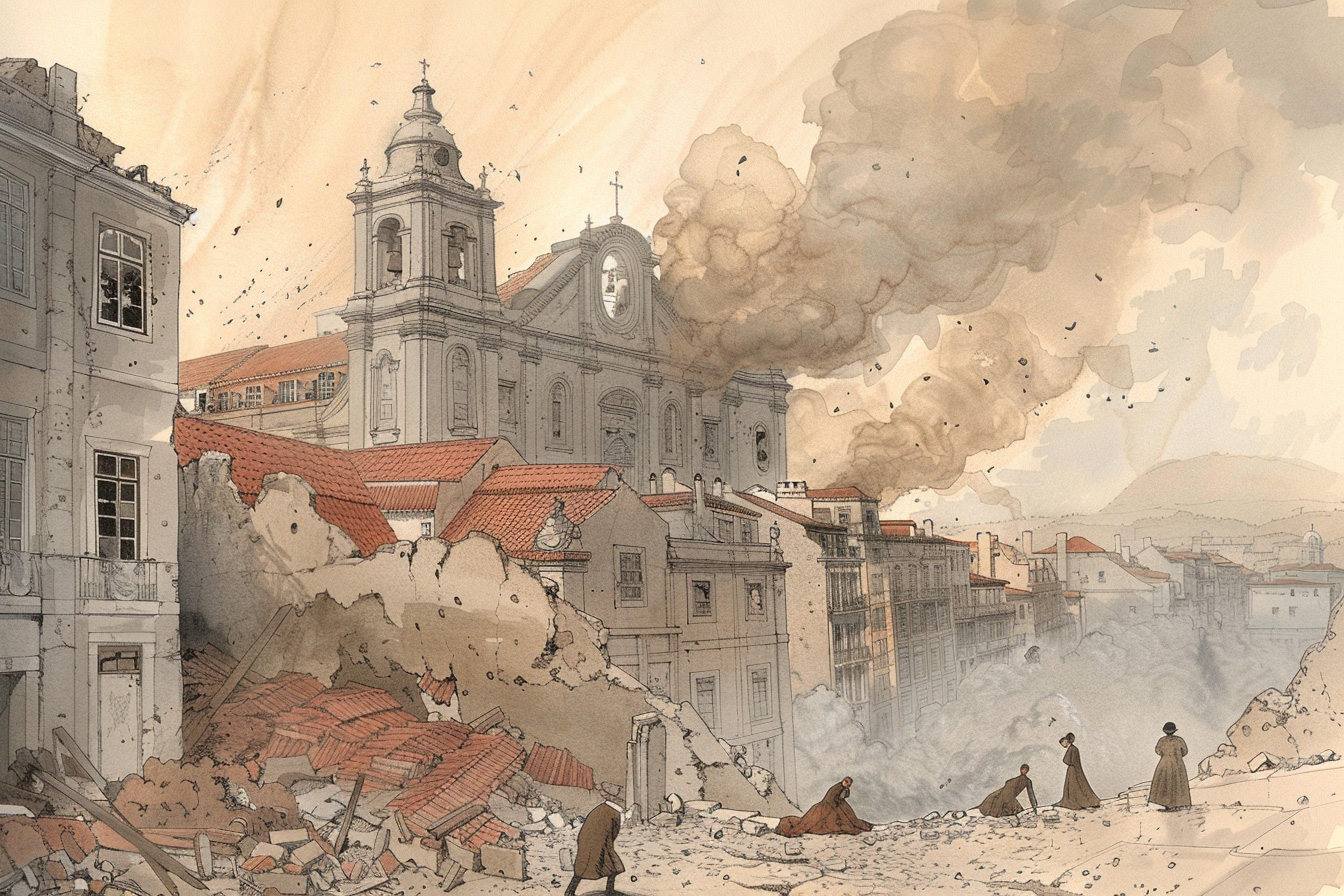
The earthquake, followed by fires and a massive tsunami, devastated the city centre and killed an estimated 60,000 people. But more than a natural disaster, it triggered an existential tremor across Europe. As Portuguese writer Vasco Graça Moura put it, “Never had the demon of fear spread so fast and so coldly across the Earth.”
Goethe, who was six years old at the time, would later recall the quake in Poetry and Truth as his first confrontation with metaphysical suffering. Lisbon’s ruin became a universal reference. Philosophers, poets and theologians reacted in a chain of essays, verses and debates.
The rational optimism of Leibniz, with his idea that we live in “the best of all possible worlds,” was severely questioned. Voltaire responded with Poème sur le désastre de Lisbonne (1756), a scathing attack on providence and a denunciation of theological cruelty:
“Will you say, ‘This is result of eternal laws
Directing the acts of a free and good God’?
Will you say, seeing this mass of victims,
‘God is avenged, their death is payment for their crimes’?”
— Voltaire, Poem on the Lisbon Disaster
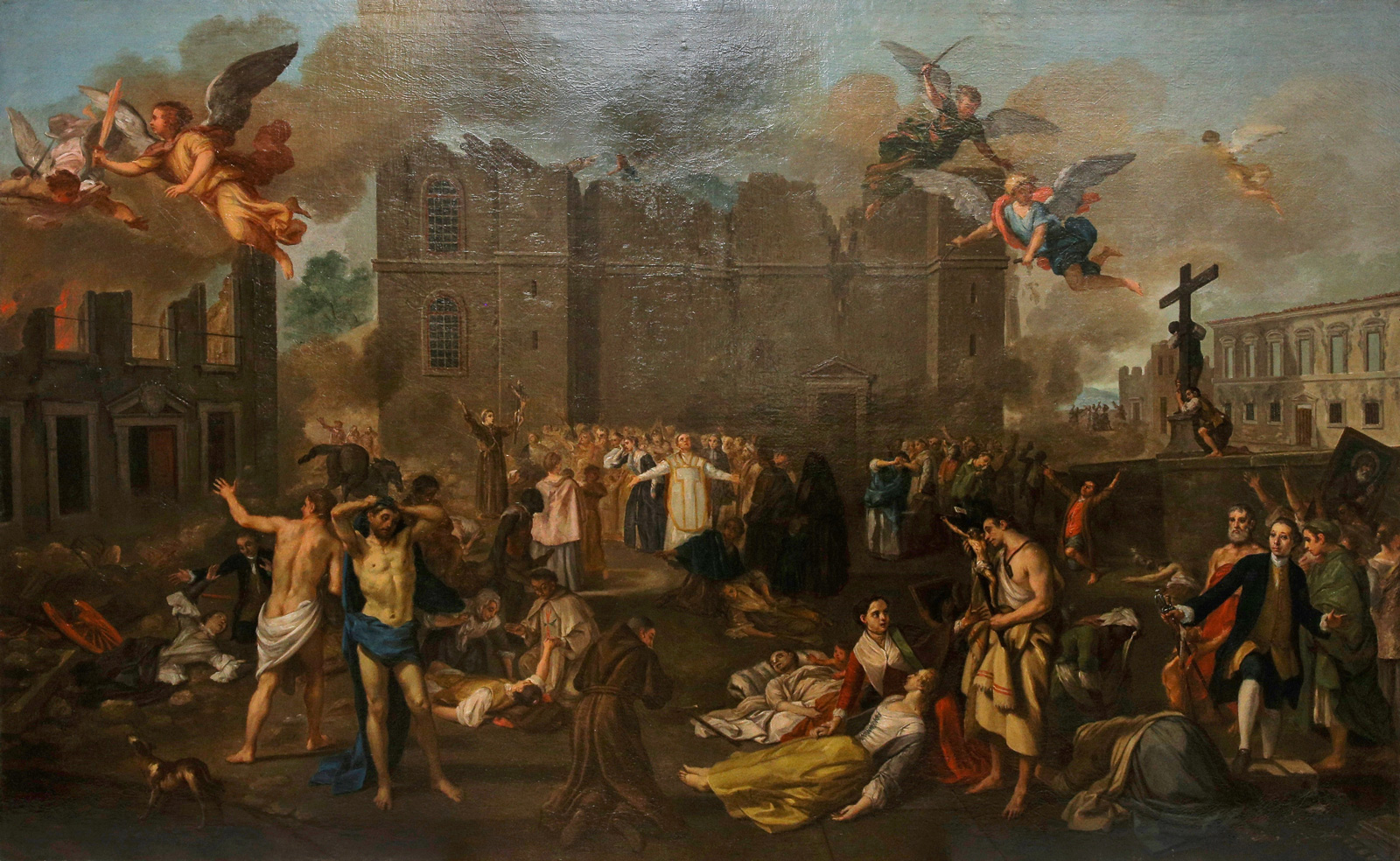
©The 1755 Earthquake (1756-92), João Glama (MNAA)
God, the Devil and the punishment of a city
In Portugal, the dominant narrative was one of divine retribution. The Inquisition amplified sermons of guilt. Friar Manuel da Epifania claimed the disaster was the result of God’s wrath. Theological rhetoric replaced scientific inquiry. The burning of churches and the death of worshippers were seen by many as divine punishment for a morally decadent society.
As Vasco Graça Moura noted, “The city became a theatre of guilt, full of penitential sermons, public processions, and staged sorrow.” This was still a world in which evil was explained by the Devil and earthquakes by the wrath of Heaven.
This was still a world in which evil was explained by the Devil and earthquakes by the wrath of Heaven.
A European debate: reason versus faith
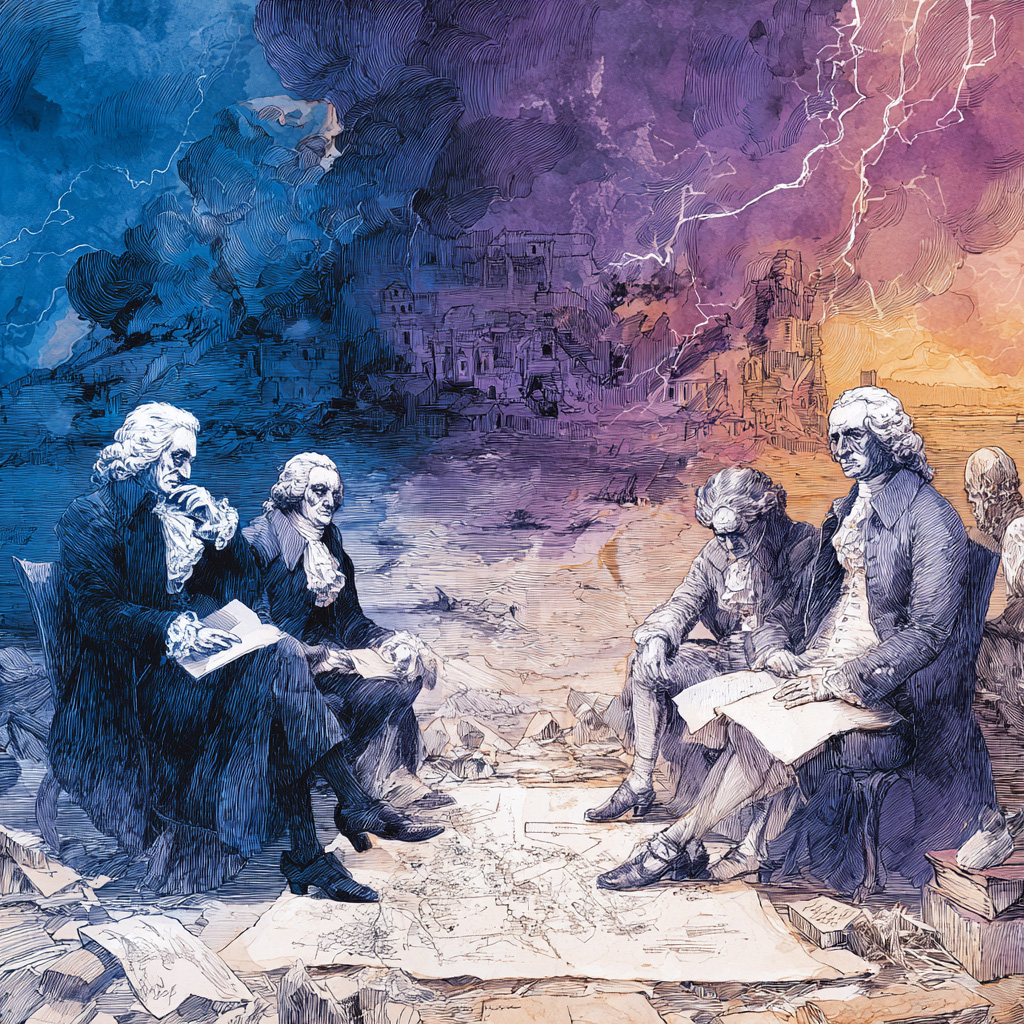
Outside Portugal, the earthquake sparked a continental debate. A young Immanuel Kant published three short essays attempting to explain the phenomenon through natural causes rather than divine will. For Kant, the Lisbon disaster was a call for empirical reasoning.
Rousseau responded to Voltaire with a more tempered view, suggesting that man suffers less because of nature than because of crowded cities and artificial lifestyles. This was the beginning of a new critique of urban progress as a hidden cause of modern suffering.
Alexander Pope, David Hume and other thinkers revisited the “problem of evil” with new urgency. Lisbon became an emblem of instability, human limitation, and the failure of all-encompassing explanations.
Outside Portugal, the earthquake caused an intellectual shockwave.
Lisbon rebuilt and modernity born from the ashes
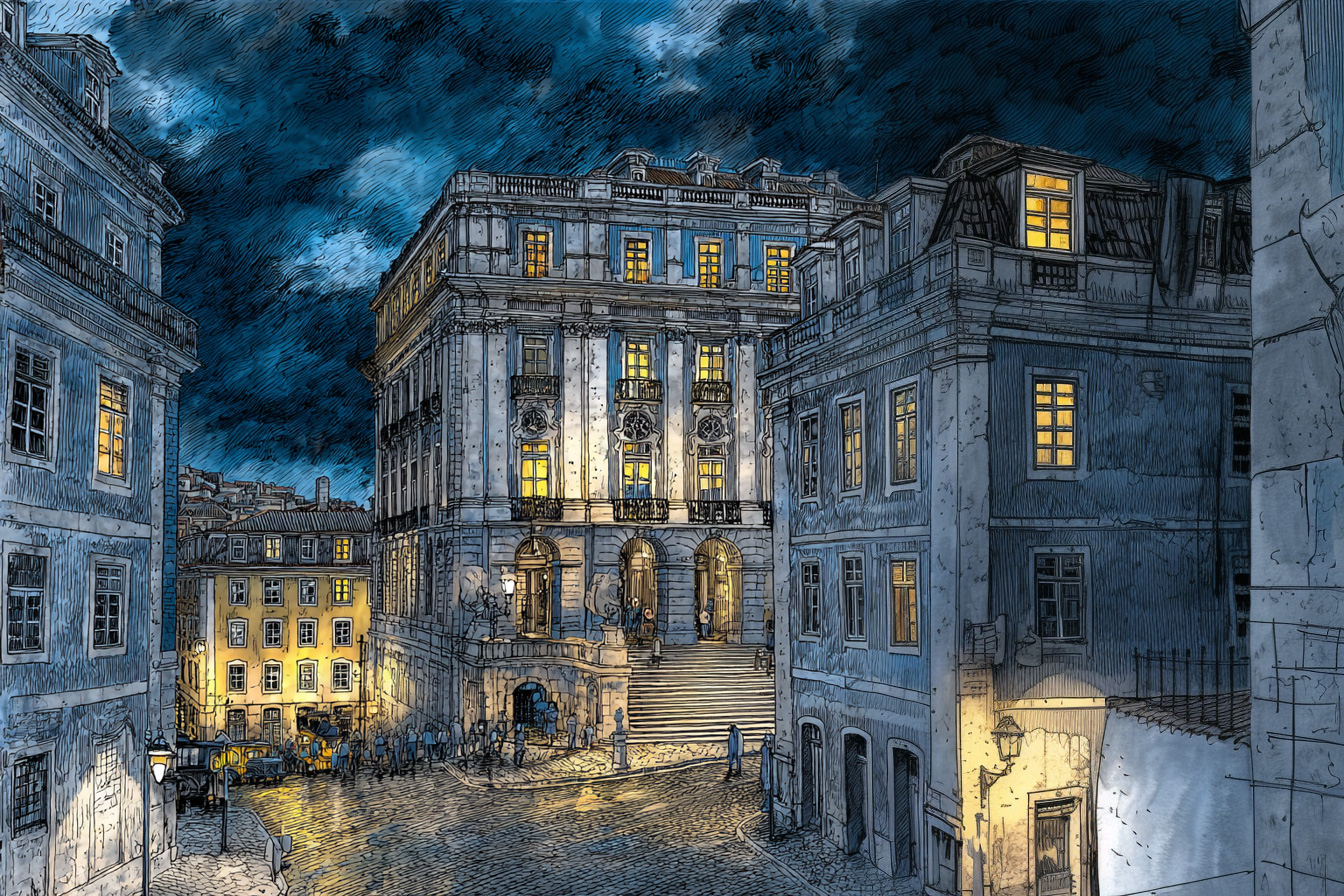
Under the leadership of the Marquês of Pombal, Lisbon was rebuilt with a rationalist, enlightenment spirit. The Baixa Pombalina emerged with orthogonal streets, anti-seismic building codes, and a vision of orderly, modern progress in stark contrast to the Baroque chaos of old.
The reconstruction was also political. Pombal’s famous order, “Bury the dead and take care of the living,” became the mantra of a new era. The Portugal that rose from the ruins was less mystical and more modern, less clerical and more secular.
The philosophical legacy: between chaos and meaning
The Lisbon earthquake was not just a geological event. As Theodor Adorno later wrote, it was a “foundational moment of modernity.” It marked the end of blind trust in the moral purpose of suffering and the beginning of a demand for human responsibility and rational understanding.
From Lisbon onwards, the West began to ask whether meaning must be constructed, not received. Whether silence from God was a theological mystery, or a philosophical turning point.
Main sources and references:
-
- Vasco Graça Moura, Poema sobre o Desastre de Lisboa (Assírio & Alvim, 2005)
- Voltaire, Poème sur le désastre de Lisbonne (1756)
- Goethe, Dichtung und Wahrheit
- Immanuel Kant, On the Causes of Earthquakes (1756)
- Theodor Adorno, Negative Dialectics
- Jean-Jacques Rousseau, Letter to Voltaire on the Lisbon Earthquake (1756)
- António Vieira, Sermões (indirect references to punishment and providence)
- Alexander Pope, Essay on Man (cited in period texts)
- Engraving: “Lisbon after the Earthquake” (18th-century German print)